 HYGO News
 OMB Director Shalanda Young Won't Say If Debt Deal Is "Admission" Government Spent Too Much
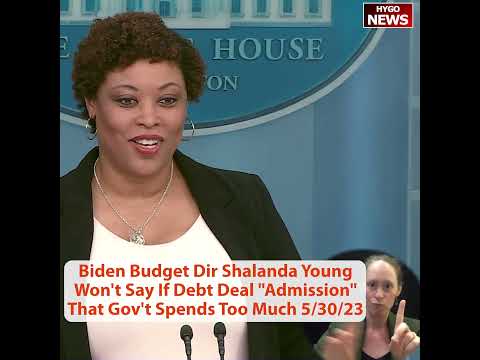
OMB Director Shalanda Young Won’t Say If Debt Deal Is “Admission” Government Spent Too Much
A reporter pressed OMB Director Shalanda Young during a May 2023 White House briefing on whether the debt ceiling deal was an “admission” that the government had spent too much over the prior two years. Young deflected without yes or no: “We’re in divided government. And both sides have thoughts about the trajectory of the country of spending. This president takes a back seat to nobody on deficit reduction. 1.7 trillion reduction in the first two years.” She referenced Biden’s budget proposal: “His budget put forth a plan to reduce the deficit by 3 trillion more.” She closed with a revenue framing: “If you really want to do a big deficit reduction, where’s the revenue?”
The Admission Question
- Reporter framing: “Is this an admission by the president that maybe the government spent too much?”
- Editorial reach: The framing dramatized substantive question.
- Hearing record: The framing is now in the formal record.
- Long arc: The framing fed broader debates.
- Long arc: The framing remained central to media coverage.
The Divided Government Framing
- Young framing: “We’re in divided government.”
- Editorial reach: The framing positioned political reality.
- Hearing record: The framing is now in the formal record.
- Long arc: The framing fed broader debates.
- Long arc: The framing remained central to messaging.
The Both Sides Thoughts
- Young framing: “Both sides have thoughts about the trajectory.”
- Editorial reach: The framing positioned bipartisan engagement.
- Hearing record: The framing is now in the formal record.
- Long arc: The framing fed broader debates.
- Long arc: The framing remained central to messaging.
The Back Seat To Nobody
- Young framing: “Takes a back seat to nobody on deficit reduction.”
- Editorial reach: The framing positioned Biden as deficit hawk.
- Hearing record: The framing is now in the formal record.
- Long arc: The framing remained central to White House messaging.
- Long arc: The framing fed broader debates.
The 1.7 Trillion Reference
- Young framing: “1.7 trillion reduction in the first two years.”
- Editorial reach: The framing referenced standard White House figure.
- Hearing record: The framing is now in the formal record.
- Long arc: The figure became central to White House messaging.
- Long arc: The figure was contested in fact-checking.
The 3 Trillion Reference
- Young framing: “Reduce the deficit by 3 trillion more.”
- Editorial reach: The framing referenced FY24 budget.
- Hearing record: The framing is now in the formal record.
- Long arc: The framing remained central to White House messaging.
- Long arc: The framing fed broader debates.
The Revenue Framing
- Young framing: “If you really want to do a big deficit reduction, where’s the revenue?”
- Editorial reach: The framing positioned tax increases.
- Hearing record: The framing is now in the formal record.
- Long arc: The framing remained central to White House messaging.
- Long arc: The framing fed broader debates.
The Big Deficit Reduction Framing
- Young framing: “A big deficit reduction.”
- Editorial reach: The framing acknowledged scope.
- Hearing record: The framing is now in the formal record.
- Long arc: The framing fed broader debates.
- Long arc: The framing remained central to messaging.
The Substantive Deflection
- Young approach: Young avoided yes-or-no.
- Editorial reach: The deflection drew media attention.
- Hearing record: The deflection is now in the formal record.
- Long arc: The deflection fed Republican messaging.
- Long arc: The deflection remained central to coverage.
The Shalanda Young Identification
- OMB Director: Young led the Office of Management and Budget.
- Editorial reach: Young’s role gave the testimony official weight.
- Hearing record: Young’s role is now in the formal record.
- Long arc: Young continued to be central through 2024.
- Long arc: Young shaped subsequent debates.
The Steve Ricchetti
- White House counselor: Ricchetti was a senior White House counselor.
- Editorial reach: Ricchetti’s role shaped negotiations.
- Hearing record: Ricchetti’s role is now in the formal record.
- Long arc: Ricchetti continued to be central through 2024.
- Long arc: Ricchetti shaped subsequent debates.
The OMB Role
- Editorial reach: OMB shapes federal budget process.
- Hearing record: The OMB role context is now in the formal record.
- Long arc: OMB continued through 2024.
- Long arc: OMB shaped subsequent debates.
- Long arc: OMB fed broader debates.
The Federal Spending Layer
- Editorial reach: Federal spending was central to debt ceiling debate.
- Hearing record: The spending context is now in the formal record.
- Long arc: Spending continued through 2024.
- Long arc: Spending shaped subsequent debates.
- Long arc: Spending fed broader debates.
The Revenue Layer
- Editorial reach: Revenue (tax increases) was central to White House framing.
- Hearing record: The revenue context is now in the formal record.
- Long arc: Revenue continued through 2024.
- Long arc: Revenue shaped subsequent debates.
- Long arc: Revenue fed broader debates.
The Biden Budget FY24
- March 2023 release: Biden released FY24 budget on March 9.
- Editorial reach: The budget shaped negotiation positioning.
- Hearing record: The budget context is now in the formal record.
- Long arc: The budget continued through 2024.
- Long arc: The budget fed broader debates.
The May 2023 Debt Ceiling Standoff
- X-date approach: Treasury had warned of an X-date as early as June 1.
- Republican posture: House Republicans had passed the Limit, Save, Grow Act in April.
- White House posture: The White House had pivoted to negotiation in early May.
- Eventual deal: A deal eventually included two-year discretionary caps.
- Editorial reach: The standoff was the dominant economic story of spring 2023.
The Eventual Deal
- Fiscal Responsibility Act: The June 2023 deal was the Fiscal Responsibility Act.
- Two-year caps: The deal imposed two-year discretionary spending caps.
- Work requirements: The deal included expanded SNAP work requirements.
- Energy permitting: The deal included some energy permitting reforms.
- Editorial reach: The deal averted default and stabilized the ceiling through 2025.
The Republican Strategy
- Spending caps demand: Republicans demanded spending caps as ceiling condition.
- Limit, Save, Grow Act: House Republicans passed the bill in April 2023.
- Public-facing posture: The strategy was designed for clip distribution.
- Long arc: The strategy remained central to Republican messaging.
- Hearing impact: The strategy placed the spending demand on the formal record.
The White House Strategy
- No-conditions framing: White House defended no-conditions ceiling action.
- Manufactured crisis framing: White House framed the standoff as Republican-driven.
- Constitutional duty framing: White House framed ceiling action as Congress’s duty.
- Editorial reach: The strategy was central to White House messaging.
- Long arc: The strategy remained central through the standoff.
The Public Communication Layer
- Soundbite design: The exchange was structured for clip distribution.
- Documentary value: The hearing record now contains a clean Young framing.
- Media uptake: The clip moved on conservative media as a Republican response argument.
- Audience targeting: Young’s style is built for retail political distribution.
- Long arc: The framing remained central to White House messaging through 2024.
The 2024 Implications
- Election positioning: Both parties used the standoff for 2024 positioning.
- Fiscal politics: Fiscal politics shape Senate and presidential races.
- Long arc: The episode will shape debt ceiling politics through 2024 and beyond.
- Hearing legacy: The hearing record will be cited in future debt ceiling debates.
- Long arc: The standoff outcome stabilized the ceiling through 2025.
Key Takeaways
- A reporter pressed Young on debt deal as “admission” of overspending.
- Young deflected with divided government framing.
- Young defended Biden’s deficit reduction record at $1.7T + $3T.
- Young pivoted to revenue framing.
- Young avoided yes or no answer.
- The exchange dramatized White House framing.
Transcript Highlights
The following quotations are drawn from an AI-generated Whisper transcript of the briefing and should be considered unverified pending official transcript release.
- “Is this an admission by the president that maybe the government spent too much money over the past two years?” — reporter
- “We’re in divided government” — Shalanda Young
- “Both sides have thoughts about the trajectory of the country of spending” — Young
- “This president takes a back seat to nobody on deficit reduction. 1.7 trillion reduction in the first two years” — Young
- “His budget put forth a plan to reduce the deficit by 3 trillion more” — Young
- “If you really want to do a big deficit reduction, where’s the revenue?” — Young
Full transcript: 107 words transcribed via Whisper AI.