 HYGO News
 Biden Advisor: People Just Need To 'Pay More Attention'; KJP: Biden Leading On Lowering Costs
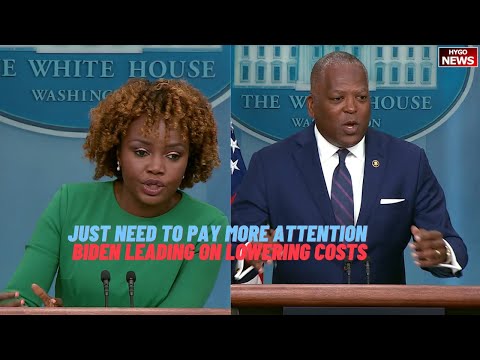
Biden Advisor Says People Need to “Pay More Attention”; KJP Deflects on Age, Sanders Criticism
On August 28, 2023, a White House press briefing featuring both a top Biden advisor and Press Secretary Karine Jean-Pierre produced several revealing exchanges about the administration’s messaging struggles. Biden advisor Steve Benjamin dismissed the President’s dismal polling numbers by telling reporters that Americans simply needed to “pay more attention” to the administration’s investments, while Jean-Pierre fielded sharp questions about Senator Bernie Sanders’s criticism that Biden should spend less time touting Bidenomics and more time addressing voter anxieties. A reporter also asked Jean-Pierre directly whether the White House had plans to demonstrate that Biden could “continue to do the job at his advanced age,” prompting a lengthy response that cited the President’s record while never actually addressing the fitness question.
Biden Advisor: People Will “Pay More Attention”
The most discussed moment of the briefing came when a reporter asked Steve Benjamin, a senior Biden advisor, whether the administration was confident that its economic achievements would resonate with Black Americans, given that the Supreme Court had struck down both student loan forgiveness and affirmative action.
The reporter asked: “Is the administration confident that some of these economic achievements will really resonate among Black Americans to reality?”
Benjamin’s answer became the briefing’s headline: “I do believe that when the rubber hits the road, people will pay more attention to these dramatic investments in their quality of life and listen more closely to these important issues.”
The suggestion that voters who disapproved of Biden’s handling of the economy simply were not paying enough attention was a variation on a recurring White House theme. Rather than acknowledging that high prices, elevated interest rates, and stagnant real wages might explain the polling, the administration’s message was that voters needed to be better informed about the President’s accomplishments. Critics argued this framing was condescending — telling struggling families that they would approve of the President if only they paid closer attention to what he was doing for them.
Benjamin on Equity as “Sacrosanct”
Benjamin also emphasized equity as a core principle of the administration’s approach. He cited Biden’s first executive order on equity and a subsequent order signed on the anniversary of Bloody Sunday to protect voting rights.
“The administration has since day one, since the President signed his first executive order on making sure that everything we’ve done is focused on equity in this administration and all of his work since then,” Benjamin said. “It is sacrosanct in everything this administration does.”
The use of “sacrosanct” — meaning too important to be changed or challenged — drew attention for its strength. Describing a policy framework as sacrosanct suggested that the equity agenda was beyond debate or modification, even if voters expressed different priorities.
KJP Confronted With Sanders Criticism
Jean-Pierre faced a pointed question about criticism from Senator Bernie Sanders, an independent who caucuses with Democrats. The reporter laid out Sanders’s remarks in detail: “He said the president has every right to be proud of his record, but he seems to suggest that the president should spend less time touting his record and Bidenomics and more time speaking to the anxieties of Americans who are still struggling in the current economy. He said Democrats up and down the line are going to have to be much clearer to the American people as to what they stand for.”
Jean-Pierre’s response agreed with Sanders in principle while subtly dismissing the substance of his critique: “We agree with the senator. When it comes to what we’re doing, it’s just the beginning. This is part of trying to make sure that we do build a middle class.”
The “we agree” was tactical. By claiming agreement, Jean-Pierre defused the confrontational framing without actually committing to the specific change Sanders had suggested: less Bidenomics boasting, more engagement with economic anxiety. She then pivoted to upcoming policy announcements: “We’re going to hear from this president this week about how he’s going to continue to lower costs, lower health care costs for Americans.”
The exchange highlighted a tension within the Democratic coalition. Sanders, who represented the party’s progressive wing, was publicly telling the White House that its messaging strategy was failing and that voters wanted acknowledgment of their struggles, not a sales pitch on existing accomplishments. Jean-Pierre’s response suggested the White House believed it could satisfy both camps by claiming agreement while continuing the same approach.
”Can He Continue to Do the Job at His Advanced Age?”
The briefing’s most direct question came when a reporter addressed Biden’s age head-on: “I knew a few older Americans — an open-ended question on their thoughts on the president, and the most common response has to do with his age. How old he is, the oldest president in history. Does the White House have additional plans to demonstrate that he can continue to do the job at his advanced age and kind of allay some of those concerns?”
Jean-Pierre’s answer was lengthy but notably evasive on the actual question: “I mean, look, I appreciate the question. I get it often, as you know. And what I would say, and I’ve said this many times and many of my colleagues have said this, the President says this: if you watch him, if you’ve seen what he’s done the last two years, this is a president has had a historic administration in just two years.”
She continued with a list of achievements: “In many ways, this president has been able to do things that is going to change how American families move forward, whether it is economic, whether it’s health care, whether it is trying to make sure that they are able to give to their, you know, do what they can for their family, for their kids.”
The answer cited Biden’s policy accomplishments as evidence of his fitness, a framing that conflated legislative achievements (which involved large teams and Congress) with the personal physical and cognitive capacity the reporter was asking about. Jean-Pierre never described any specific plan to demonstrate Biden’s fitness, instead offering that the White House would “happily discuss” his record “as it relates to age.”
The exchange foreshadowed the age debate that would dominate the 2024 campaign and eventually contribute to Biden’s withdrawal from the race in July 2024.
Key Takeaways
- Biden advisor Steve Benjamin told reporters that Americans would “pay more attention” to the administration’s investments “when the rubber hits the road,” suggesting voter disapproval stemmed from insufficient awareness rather than genuine economic hardship.
- Benjamin called equity “sacrosanct in everything this administration does,” describing the policy framework as beyond debate.
- Jean-Pierre claimed to “agree” with Senator Sanders’s criticism that Biden should spend less time touting Bidenomics and more time addressing voter anxieties, but offered no concrete change in approach.
- When asked whether the White House had plans to demonstrate Biden could “continue to do the job at his advanced age,” Jean-Pierre cited his legislative record rather than describing any specific plan to address fitness concerns.
- The briefing captured the administration’s persistent messaging challenge: defending a record that voters consistently rated poorly in polls while dismissing criticism from both the press and members of its own coalition.
Full Transcript
The following is transcribed from the video audio:
Four decisions that have obviously led to setbacks and some of the more sweeping proposals by this administration such as student loan relief or even affirmative action when many people still feel that their civil liberties are being infringed upon, is the administration confident that some of these economic achievements will really resonate among Black Americans to reality? I do believe that when the rubber hits the road people will pay more attention to these dramatic investments in their quality of life and listen more closely to these important issues. But that’s politics. I want to make sure we stay closely to the policy. Is the administration still on track to do that in the next decade? As far as I understand. It’s quantified. Sure.
I would say this. The administration has since day one since the President signed his first executive order on making sure that everything we’ve done is focused on equity in this administration and all of his work since then including obviously another executive order signed on anniversary of Bloody Sunday to make sure the sacred right to the franchise is protected. It is sacrosanct in everything this administration does.
Thanks, Green. I wanted to get your response to some comments from Senator Sanders over the weekend. He said the president has every right to be proud of his record but he seems to suggest that the president should spend less time touting his record and Bidenomics and more time speaking to the anxieties of Americans who are still struggling in the current economy. He said Democrats up and down the line are going to have to be much clearer to the American people as to what they stand for. I wonder if you have any reaction to that. We agree with the senator. When it comes to what we’re doing is just the beginning. This is part of trying to make sure that we do build a middle class. And so look, we think there’s more work to do. We’re going to hear from this president this week about how he’s going to continue to lower cost, lower health care costs for Americans, something that the president has been leading on and his administration has continuously put out ways to do that, Inflation Reduction Act, how it’s going to be able to help Americans lower costs.
I knew a few old Americans, an open-ended question on their thoughts on the president and the most common response has to do with his age. How old he is, the oldest president in history. If there’s a White House of additional plans to demonstrate that he can continue to do the job at his advanced age and kind of allay some of those concerns. I mean, look, I appreciate the question. I get it often, as you know. And what I would say, and I’ve said this many times and many of my colleagues have said this, the president says this, if you watch him, if you’ve seen what he’s done the last two years, this is a president has had a historic administration in just two years. In many ways, this president has been able to do things that is going to change how American families move forward, whether it is economic with economy, whether it’s health care, whether it is trying to make sure that they are able to give to their, you know, do what they can for their family, for their kids. That is important. And so that’s what we will happily, happily to discuss as it relates to age, what the president has been able to do and how he’s been able to deliver.