 HYGO News
 Beg your pardon? Biden mistakenly believes he's being heckled, I was getting a little worried
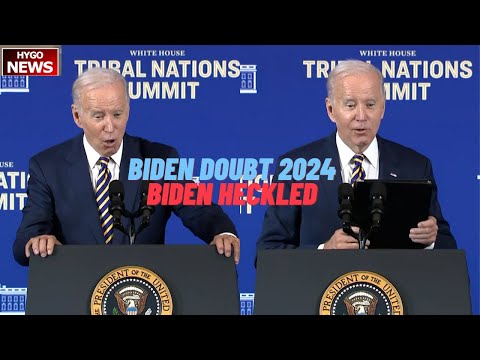
Biden Thinks He’s Being Heckled at Tribal Nations Summit, Says “I Thought I Said No” — Confused Moment Captured at White House Event
On 12/1/2022, President Biden experienced a confused moment at the White House Tribal Nations Summit, apparently mistaking something in the room for heckling. Speaking about tribal sovereignty (“Tribes as nations and treaties as law”), Biden suddenly responded to what appeared to be a comment from the audience: “Beg your pardon? I thought I just said no. I was a little — getting a little worried. I thought just — I thought I said no.” The moment captured a president responding defensively to perceived criticism that wasn’t actually happening. Later in the same event, Biden made his characteristic reference to the recurring “take a seat” confusion from a prior event where there weren’t chairs, and he made unusual comments about Interior Secretary Deb Haaland spending “more time on reservations” that became a rambling aside about the Navajos.
”Beg Your Pardon? I Thought I Said No”
The confused exchange came while Biden was discussing tribal sovereignty. “Tribes as nations and treaties as law. Respect for… Beg your pardon? I thought I just said no. I was a little getting a little worried. I thought just… I thought I said no,” Biden said.
The exchange was strange for several reasons:
No heckling was visible. The White House Tribal Nations Summit was a formal event with tribal leaders as invited guests. There was no visible heckling or interruption that would have prompted the “beg your pardon” response. Biden appeared to be reacting to something he thought he heard but that wasn’t actually happening.
“I thought I just said no” — This phrase made no sense in context. Biden hadn’t said “no” to anything recently. He was in the middle of a prepared speech about tribal sovereignty. The reference to having said “no” seemed to come from nowhere.
“I was getting a little worried” — Worried about what? Biden didn’t explain. The admission of worry in response to a non-event suggested that Biden was processing phantom audience reactions or confusing current moments with other memories.
The overall effect was of a president responding to something that existed only in his own mind. The audience was watching a scripted speech. Biden was apparently experiencing something else — possibly a memory, possibly confusion, possibly a moment of disorientation.
”Don’t Hesitate to Correct Me When I’m Making”
Biden then acknowledged that he might make mistakes. “And I’m sure I’ll make mistakes, but you know me. Don’t hesitate to correct me when I’m making. I know you, you won’t hesitate. But I really mean it. I really mean it,” Biden said.
The acknowledgment was notable. Biden was explicitly inviting correction from the audience — suggesting he expected to make errors during the speech. This was a form of preemptive humility, but it also raised questions about why a president would anticipate needing correction during a prepared speech.
Most presidents deliver scripted remarks and trust their speechwriters and preparation. They don’t typically invite audience corrections during the speech itself. Biden’s invitation to be corrected suggested either that he was trying to establish a friendly relationship with the audience, or that he was genuinely uncertain about his ability to deliver the speech without errors.
”The Irish of It”
Biden then invoked one of his recurring family references. “I am committed. And as my grandfather, Finnegan would say, that’s the Irish of it. Thank you all very much. Thanks. Thank you, thank you, thank you,” Biden said.
“Grandfather Finnegan” appearances were standard in Biden’s speeches. He frequently invoked his maternal grandfather, Ambrose Finnegan, as a source of folk wisdom and Irish identity. “That’s the Irish of it” was one of several phrases Biden attributed to his grandfather, along with “spread the faith” and other aphorisms.
The Irish identity references were political positioning — they connected Biden to Irish-American voters, distinguished him from his largely WASP predecessors, and provided a source of folksy wisdom for his speeches. But the references had become repetitive through overuse, appearing in virtually every major speech regardless of whether they fit the occasion.
The “Take a Seat” Reference
Biden made a reference to a recurring bit from prior events. “Finally, finally, finally, let’s keep it going. Okay? Please take a seat if you have one. I say that because one day I said take a seat and everybody said he doesn’t even understand there’s no chairs out here,” Biden said.
The reference was to an earlier event where Biden had told an audience to “take a seat” without realizing there were no chairs. That moment had drawn criticism and mockery, and Biden was apparently addressing the earlier incident by explaining why he was saying “take a seat if you have one” at the current event.
The meta-reference to the earlier confusion was unusual. Most politicians don’t explicitly reference prior gaffes in subsequent speeches. Biden’s decision to bring up the chair incident suggested either that he wanted to preempt criticism of the current event, or that he was genuinely processing the earlier confusion aloud.
”I’m Worried She’s Not Going to Come Home”
Biden made unusual comments about Interior Secretary Deb Haaland. “Deb was with me last year at the White House when I restored national monuments at Bear’s Ears and the Grand Staircase Escalante in Utah. The National Canyon and Seamounts in New England. In fact, last year, Jill, my wife traveled with Deb to the Cherokee Emerging School in Oklahoma. The Cherokee Nation used part of this funding to start building a second school and revitalized the use of the Cherokee language. By the way, she spent a lot of time in other reservations, other nations as well. I’m worried she’s not going to come home one these days when she goes. You think I’m joking? I’m telling you. If I hear more about the Navajos than I hear about me. You all think I’m kidding, don’t you?” Biden said.
The comments were strange for multiple reasons:
“I’m worried she’s not going to come home” — Biden was suggesting that Haaland, the first Native American to serve as Interior Secretary, might choose to stay with tribal communities rather than return to Washington. This was presented as a joke but had uncomfortable implications about dual loyalty.
“If I hear more about the Navajos than I hear about me” — Biden was apparently complaining that Haaland talked more about tribal nations than about him. This was an odd complaint — the Secretary of the Interior is responsible for federal relations with tribal nations, so talking about tribes would be a core part of her job.
“You think I’m joking? You all think I’m kidding” — Biden twice insisted that his comments were serious, which suggested either that he wanted the audience to understand he was serious (unusual for what sounded like a joke) or that he was genuinely uncertain whether his audience was taking his comments as humor or as sincere complaints.
The overall effect was of a president making ostensibly humorous comments that landed uncomfortably because they raised questions about his actual feelings toward a cabinet member.
The Rail Strike Pivot
The transcript then shifted to a press briefing context where KJP was asked about the rail strike. “Just to follow up a little bit on Mary’s question. Given the close ties the administration has to the labor movement, have there been conversations behind the scenes? Kind of explaining the why here or kind of detailing the decision-making process?” the reporter asked.
KJP’s response emphasized process. “So, I mean, look, and we have said this, I said this the other day. Secretary Walsh has been in touch in late November. The opportunity to make their voices heard. And so that’s kind of how you saw the process the last couple of months. We’ve been engaged. We’ve been certainly working with them on the issue of the coming to this tentative agreement,” KJP said.
The response referenced Labor Secretary Marty Walsh’s involvement in communications with unions. Walsh had been the administration’s primary interlocutor with labor, and his engagement was meant to demonstrate the administration’s commitment to worker interests. But the “been in touch” and “been engaged” framing was vague. Reporters wanted to know what specific conversations had happened, what had been discussed, and what decisions had been made. KJP’s response provided none of this detail.
Key Takeaways
- Biden appeared confused at the White House Tribal Nations Summit, responding to imagined heckling with “Beg your pardon? I thought I just said no.”
- He explicitly invited audience corrections during his speech: “Don’t hesitate to correct me when I’m making.”
- Biden referenced the recurring “take a seat” confusion from a prior event without chairs, suggesting the incident still bothered him.
- He made uncomfortable jokes about Interior Secretary Deb Haaland, saying he was “worried she’s not going to come home” and complaining he heard “more about the Navajos than about me.”
- The transcript also captured KJP’s vague response about behind-the-scenes conversations on the railroad strike, referencing Labor Secretary Walsh’s engagement without providing specifics.
Transcript Highlights
The following is transcribed from the video audio (unverified — AI-generated from audio).
- Tribes as nations and treaties as law. Beg your pardon? I thought I just said no.
- I was a little getting a little worried. I thought just — I thought I said no.
- I’m sure I’ll make mistakes, but you know me. Don’t hesitate to correct me.
- Please take a seat if you have one. I say that because one day I said take a seat and everybody said he doesn’t even understand there’s no chairs out here.
- I’m worried she’s not going to come home one these days when she goes. If I hear more about the Navajos than I hear about me.
- Secretary Walsh has been in touch in late November.
Full transcript: 509 words transcribed via Whisper AI.