 HYGO News
 Barack Obama turned to me: “Joe, fix Detroit', not a joke
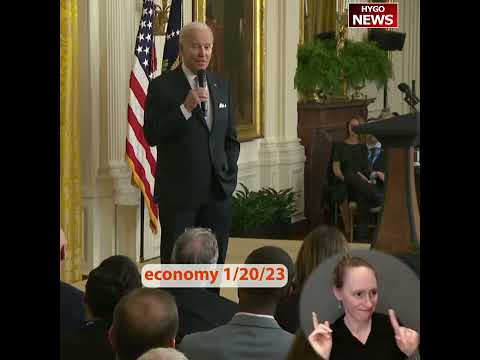
Biden Story: Obama Told Me “Joe, Fix Detroit” — “Not a Joke” — Then Claims “China Is Number Two, We’re Number Eight”
In January 2023, President Biden retold a story about being asked by former President Barack Obama to “fix Detroit” when Biden was Vice President. “I inherited a hell of a situation. And I remember Barack Obama turned to me one day and said, not a joke, Joe fixed Detroit. I said, oh, no problem. No problem,” Biden recounted. He then described what he learned from Detroit’s mayor about transportation access for workers: “Something was as close to 70% of the people in the city, 60% of the people in the city who were high school educated, had jobs that were outside the city. And they couldn’t get there. They didn’t have 60%, didn’t have cars. So we ended up getting, what, 20 new buses?” Biden transitioned to manufacturing claims that contained a confused statistic: “We’ve created 11 million jobs, 750,000 manufacturing jobs. We used to be number one. Now China is number two. We’re number eight.” The “we’re number eight” was unusual given the U.S. remained a top manufacturing nation.
The Obama-Biden Detroit Story
Biden’s Detroit story was a recurring anecdote:
Obama-Biden conversation — Set up.
“Fix Detroit” request — Dramatized.
“Not a joke” — Emphatic claim.
Biden’s “no problem” response — Self-deprecating.
Personal engagement — Claimed.
The story was part of Biden’s portfolio of personal anecdotes from his Vice Presidency. Detroit’s recovery from bankruptcy and decline had been a major Obama-Biden administration focus. Biden’s personal involvement in Detroit issues was part of his VP record.
”Not a Joke”
The “not a joke” qualifier was characteristic:
Emphasis phrase — Biden signature.
Believability insistence — Suggesting disbelief possible.
Honest claim — Underlining truthfulness.
Verbal tic — Frequent use.
Audience reassurance — Story is real.
Biden often used “not a joke” when telling personal stories. The phrase had become signature verbal pattern. It usually preceded or followed particularly memorable claimed events. Frequent use could suggest stories were stretched or could suggest Biden was aware listeners might doubt.
The Detroit Data
Biden cited specific statistics. “Something was as close to 70% of the people in the city, 60% of the people in the city who were high school educated, had jobs that were outside the city. And they couldn’t get there. They didn’t have 60%, didn’t have cars,” Biden said.
The data claims:
70%/60% confusion — Biden started with 70%, settled on 60%.
Out-of-city jobs — For high school educated workers.
Transportation access — Major issue.
60% without cars — Transportation gap.
Policy rationale — For transit investment.
The statistics reflected real issues in Detroit. Many Detroit residents worked in suburban industries but lacked transportation. This was documented issue. The data Biden cited had basis even if specific percentages were presented uncertainly.
The Verbal Stumbling
The delivery showed verbal issues:
“As close to 70%” — Hedging.
“60% of the people” — Correction.
“60%, didn’t have cars” — Repetition.
Specific numbers uncertain — In delivery.
Story structure — Disrupted.
The stumbling through statistics was characteristic of Biden delivery. Even when specific numbers had basis, his uncertainty in delivery affected credibility. Listeners couldn’t tell if Biden was remembering accurately or improvising.
”20 New Buses”
The intervention claim was specific. “So we ended up getting, what, 20 new buses?” Biden said.
The intervention:
Bus transportation — Specific solution.
20 new buses — Quantity.
“What” — Uncertainty.
Administration intervention — Claimed.
Practical solution — Framing.
The “what” hedging was characteristic. Biden was uncertain about exact number. This suggested either imprecise memory or uncertain specifics. The core claim — federal involvement in Detroit bus transportation — was generally accurate.
”Practical Things to Determine”
Biden shifted to general framing. “I mean, just practical things to determine. What are the things that both allow neighborhood?” Biden said.
The incomplete phrase:
“Practical things” — General framing.
“To determine” — Unclear completion.
“What are the things” — Question form.
“Allow neighborhood” — Incomplete thought.
Transition disruption — Characteristic.
The phrase was incomplete. Biden appeared to be transitioning from Detroit story to broader themes but the transition got garbled. “Allow neighborhood” to do what was unclear.
The Manufacturing Pivot
Biden then pivoted to manufacturing. “We’ve created 11 million jobs, 750,000 manufacturing jobs,” Biden said.
The statistics:
11 million jobs — Total employment gains.
750,000 manufacturing jobs — Specific sector.
Biden administration record — Claimed.
Recovery narrative — Supported.
Economic success — Framed.
The 11 million jobs figure had basis from Biden’s first two years. The 750,000 manufacturing jobs figure was also generally accurate for the period. These were legitimate administration accomplishments to cite.
”We Used to Be Number One”
Biden shifted to global ranking. “We used to be number one. Now China is number two. We’re number eight,” Biden said.
The ranking claims:
Former U.S. #1 — Historical position.
China currently #2 — Biden’s claim.
U.S. #8 — Biden’s current claim.
Manufacturing context — Implied.
Decline narrative — Suggested.
This is where the statement became factually problematic. The claim that the U.S. was “number eight” in manufacturing was incorrect. By most measures, the U.S. remained the world’s second-largest manufacturer (after China) or first (by some measures of value-added).
The Factual Reality
The accurate rankings were:
China #1 — In manufacturing output (by various measures).
U.S. #2 — In manufacturing output.
Japan #3 — Approximately.
Germany #4 — Approximately.
Other nations — Below.
The U.S. was definitively not #8 in manufacturing. Biden’s statement was factually wrong. Whether this was confusion about rankings, confusion about specific metrics, or misremembering was unclear. But the stated claim was inaccurate.
The Potential Confusions
Several possibilities for the “number eight” claim:
Per-capita manufacturing — Different ranking.
Specific sectors — U.S. lower in some.
Metric confusion — Different measurements.
Memory error — Misremembering.
Speech error — Wrong number.
None of these fully explained the claim. Per-capita manufacturing didn’t put U.S. at #8. Sector-specific rankings varied but aggregate U.S. manufacturing was #1 or #2. The claim didn’t match any standard measurement.
”Things We’ve Allowed to Happen”
Biden added characterization. “I mean, things we’ve allowed to happen,” Biden said.
The phrase:
“We” ambiguous — U.S. generally.
“Allowed” — Passive framing.
Policy criticism — Implied.
Trade policy reference — Possibly.
Industrial decline narrative — Standard.
This was standard political framing about U.S. industrial decline due to trade policy choices. China’s rise and U.S. decline in manufacturing was common theme across parties. Biden was invoking this framing but with incorrect specific numbers.
The Political Context
The speech context included administration messaging about:
Bipartisan Infrastructure Law — Investments.
CHIPS and Science Act — Manufacturing focus.
Inflation Reduction Act — Clean energy manufacturing.
Buy America — Manufacturing priority.
Supply chain resilience — Policy focus.
The administration had significant manufacturing-focused legislation. Biden was trying to position himself as reversing industrial decline. The specific data supporting this narrative mattered for political effectiveness.
The Fact-Check Material
Statements like “we’re number eight” generated fact-checking:
Fact-checkers — Verifying claims.
Republican opposition — Highlighting errors.
Media coverage — Of mistakes.
Cumulative record — Of misstatements.
Political cost — For credibility.
Each factual error in Biden’s speeches was noted by fact-checkers and opposition researchers. The cumulative record of errors affected Biden’s broader credibility claims. The “number eight” statement would be corrected in various contexts.
The Detroit Story Accuracy
The Detroit story itself had complexity:
Detroit bankruptcy — 2013, real event.
Federal response — Real.
Biden involvement — Some role.
Specific “fix Detroit” request — Harder to verify.
Bus program — Real federal participation.
The underlying story had basis, though the dramatic “Obama said fix Detroit” framing was characteristic Biden storytelling embellishment. Whether Obama specifically used those words or whether Biden was dramatizing more general policy assignments was unclear.
The Age and Credibility Context
Stories like this affected the broader age narrative:
Memory details uncertain — Showing in delivery.
Numbers wrong — In specific claims.
Verbal stumbling — Throughout.
Pattern of issues — Accumulating.
Age concerns — Reinforced.
By early 2023, every Biden public appearance was being scrutinized for age-related issues. Factual errors, verbal stumbling, and uncertain memory details all contributed to the narrative. This speech added to the record.
The 2024 Implications
As 2024 approached, these moments mattered:
Campaign material — Against Biden.
Fitness questions — Raised.
Democratic concerns — About renomination.
Opposition research — Cataloging.
Public perception — Being shaped.
Each Biden speech that produced factual errors or verbal difficulty added to 2024 campaign considerations. Whether he would run, whether he could win, whether Democrats should replace him — these questions depended partly on accumulated evidence of capability.
The Storytelling Style
Biden’s personal storytelling was longtime part of his political identity:
Folksy anecdotes — Signature style.
Personal involvement — Claimed.
Colorful details — Dramatic.
Not-a-joke assurances — Frequent.
Connection building — Through stories.
The style had served Biden well throughout his career. In this case, the storytelling was intact even if specific facts were problematic. The Detroit story framework was familiar Biden storytelling — even if specific numbers went wrong.
The Manufacturing Policy Connection
The speech was presumably about manufacturing policy:
Investment legislation — Highlighted.
Job creation — Emphasized.
Competitiveness — Addressed.
China competition — Framed.
Recovery narrative — Built.
In this context, saying the U.S. was #8 undermined the recovery narrative. If U.S. manufacturing was so weak, the administration’s policies were less transformative. The factual error worked against Biden’s messaging goals.
The Multiple Narrative Layers
Biden’s speech contained multiple narrative layers:
Personal story — Detroit anecdote.
Policy achievement — Jobs numbers.
Historical narrative — U.S. decline.
Political message — Need for action.
Administration success — Implied.
The layering usually worked well for Biden. Mixing personal stories with policy claims humanized and legitimized his positions. When factual elements failed, the whole structure wobbled.
Key Takeaways
- Biden retold his Detroit story: Obama asked him to “fix Detroit” and Biden said “no problem, no problem.”
- He cited data about 60-70% of Detroit residents having jobs outside the city without cars, leading to 20 new buses.
- Biden pivoted to administration accomplishments: “11 million jobs, 750,000 manufacturing jobs.”
- He then made a factually problematic claim: “We used to be number one. Now China is number two. We’re number eight.”
- The “number eight” claim was incorrect — the U.S. remained #1 or #2 in global manufacturing output.
- The mixed storytelling with factual errors fit a pattern of age-related concerns affecting Biden’s 2024 considerations.
Transcript Highlights
The following is transcribed from the video audio (unverified — AI-generated from audio).
- I inherited a hell of a situation. And I remember Barack Obama turned to me one day and said, not a joke, Joe fixed Detroit.
- I said, oh, no problem. No problem. Well, I got to know Detroit.
- Something was as close to 70% of the people in the city, 60% of the people in the city who were high school educated, had jobs that were outside the city.
- So we ended up getting, what, 20 new buses? Was it initially?
- We’ve created 11 million jobs, 750,000 manufacturing jobs.
- We used to be number one. Now China is number two. We’re number eight. I mean, things we’ve allowed to happen.
Full transcript: 149 words transcribed via Whisper AI.