 HYGO News
 After Biden's Disastrous Afghan Withdrawal, Kirby Claims Biden Was 'Anything But Helpless'
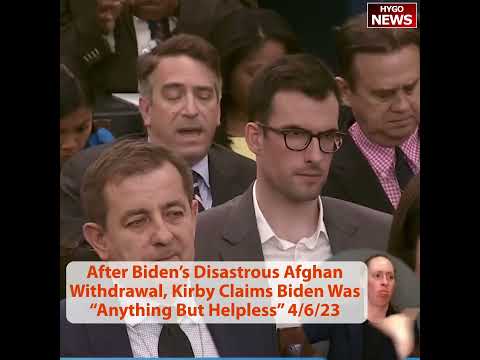
After Biden’s Disastrous Afghan Withdrawal, Kirby Claims Biden Was “Anything But Helpless”
A reporter challenged NSC spokesman John Kirby during an April 2023 White House briefing about the inherent contradiction in the administration’s Afghanistan withdrawal narrative: the depiction of Biden as a “commander-in-chief” who was “almost helpless and shaped and buffeted by individuals and forces and entities that are beyond his control” when he “had every option to increase the troop size” and “every option to intensify attacks on the 5,000 Taliban fighters.” Kirby rejected the characterization, insisting the “president was anything but helpless” during his eight months in office before the withdrawal.
The Reporter’s Pointed Framing
- Helpless depiction: Administration’s “helpless” depiction.
- Commander-in-Chief: Commander-in-Chief role.
- Forces beyond control: “Forces beyond his control” language.
- Eight months: Eight months in office.
- Option avoidance: Options allegedly avoided.
The Alternative Options
- Troop size increase: Option to increase troops.
- 5,000 Taliban fighters: Reference to Taliban prisoner release.
- Intensified attacks: Option for intensified attacks.
- Military pressure: Military pressure options.
- Strategic flexibility: Strategic flexibility.
Kirby’s Denial
- “Anything but helpless”: Direct denial framing.
- “Not at all”: Implicit “not at all” framing.
- Decision emphasis: Decision-making emphasis.
- Authority assertion: Authority assertion.
- Leadership framing: Leadership framing.
The Contradiction Analysis
- Helpless narrative: Helpless narrative tension.
- Leadership claim: Leadership claim tension.
- Responsibility distribution: Responsibility distribution.
- Narrative coherence: Narrative coherence challenge.
- Political positioning: Political positioning.
The Troop Size Decision
- 2,500 troops: 2,500 troop level.
- Increase option: Increase option availability.
- Strategic decision: Strategic decision making.
- Capability constraints: Capability constraints.
- Political considerations: Political considerations.
The Taliban Prisoner Context
- 5,000 fighters: 5,000 prisoner release.
- Doha Agreement: Doha Agreement provision.
- Taliban strengthening: Taliban strengthening effect.
- Strategic implications: Strategic implications.
- Military response options: Military response options.
The Attack Options
- Military response: Military response options.
- Taliban forces: Taliban force engagement.
- Strategic strikes: Strategic strike options.
- Air power: Air power options.
- Ground forces: Ground force options.
The Command Authority
- Presidential authority: Presidential authority.
- Commander-in-Chief role: Commander-in-Chief role.
- Decision-making: Decision-making authority.
- Resource allocation: Resource allocation authority.
- Strategic direction: Strategic direction authority.
The Narrative Challenge
- Blame distribution: Blame distribution strategy.
- Victim framing: Victim framing.
- Leadership presentation: Leadership presentation.
- Political positioning: Political positioning.
- Historical judgment: Historical judgment.
The Reporter’s Challenge Logic
- Specific options: Specific option identification.
- Authority documentation: Authority documentation.
- Contradictory narrative: Contradictory narrative.
- Leadership standards: Leadership standards.
- Professional journalism: Professional journalism.
The Message Discipline
- Narrative control: Narrative control effort.
- Message consistency: Message consistency.
- Blame management: Blame management.
- Credit claiming: Credit claiming.
- Political positioning: Political positioning.
The Historical Context
- Presidential precedent: Presidential precedent.
- Crisis leadership: Crisis leadership norms.
- Decision-making traditions: Decision-making traditions.
- Historical judgments: Historical judgments.
- Institutional memory: Institutional memory.
The Political Responsibility
- Democratic norms: Democratic accountability norms.
- Executive responsibility: Executive responsibility.
- Policy ownership: Policy ownership.
- Outcome responsibility: Outcome responsibility.
- Historical record: Historical record.
The Leadership Questions
- Decision-making quality: Decision-making quality.
- Strategic judgment: Strategic judgment.
- Risk assessment: Risk assessment.
- Advisor management: Advisor management.
- Information synthesis: Information synthesis.
The Alternative Timelines
- Status quo option: Status quo option.
- Extension option: Extension option.
- Conditions-based: Conditions-based withdrawal.
- Different timing: Different timing.
- Different execution: Different execution.
The Press Response
- Sustained pressure: Sustained pressure.
- Logical challenge: Logical challenge.
- Narrative critique: Narrative critique.
- Accountability pursuit: Accountability pursuit.
- Professional standards: Professional standards.
The Accountability Framework
- Leadership accountability: Leadership accountability.
- Decision accountability: Decision accountability.
- Outcome accountability: Outcome accountability.
- Institutional accountability: Institutional accountability.
- Historical accountability: Historical accountability.
Key Takeaways
- A reporter challenged Kirby on the administration’s “helpless” depiction of Biden during Afghanistan decisions.
- The reporter noted Biden “had every option” to increase troops and intensify attacks.
- Kirby insisted “the president was anything but helpless.”
- The exchange highlighted contradictions in administration’s Afghanistan narrative.
- The administration’s blame-distribution strategy conflicted with leadership claims.
- The reporter pressed for acknowledgment of Biden’s agency during the eight months before withdrawal.
Transcript Highlights
The following quotations are drawn from an AI-generated Whisper transcript of the briefing and should be considered unverified pending official transcript release.
- “The President was anything but helpless.” — John Kirby
- “The depiction of the commander-in-chief that you present or this commander-in-chief is of a figure almost helpless and shaped and buffeted by individuals and forces and entities that are beyond his control.” — Reporter framing
- “When he had every option to increase the troop size there during his eight months in office.” — Reporter framing
- “He had every option to intensify attacks on the 5,000 Taliban fighters.” — Reporter framing
- “What I just don’t understand why you’re willing to depict your boss the commander-in-chief is so helpless in this instance.” — Reporter question
- “Forces and entities that are beyond his control.” — Reporter framing
Full transcript: 90 words transcribed via Whisper AI.