 HYGO News
 Added jobs less than half of expected, shut virus down worldwide, wages & inflation
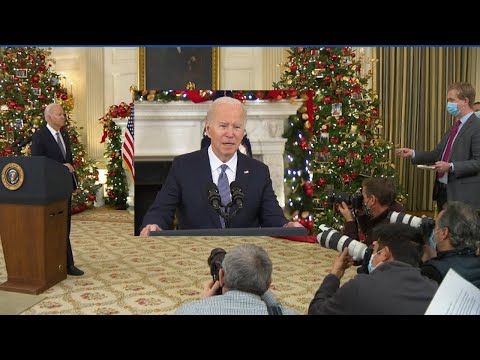
Biden Celebrates “Record” Unemployment Drop While Burying 210,000 Jobs Miss, Backtracks “Shut Down the Virus” to “Shut It Down Worldwide”
On December 3, 2021, President Biden delivered remarks on the November jobs report that exemplified the administration’s approach to unfavorable data: highlight the positive, bury the negative. U.S. employers added just 210,000 jobs in November — less than half of the 573,000 Wall Street had expected and the worst month for job creation of Biden’s presidency. Biden barely mentioned the headline jobs number, instead focusing almost entirely on the unemployment rate’s decline to 4.2 percent, which he called “the sharpest one-year decline in unemployment ever.” The same press conference featured Biden backtracking on his campaign promise to “shut down” the virus by reframing it as a global goal (“in order to beat COVID, we have to shut it down worldwide”), laughing off reports of empty shelves, repeating that wages were up while real inflation-adjusted wages were falling, and Doocy asking “are you okay?” after noticing Biden’s voice sounded different.
The Jobs Report Spin
The November 2021 jobs report presented a split narrative. The establishment survey — which measures payroll jobs — showed 210,000 positions added, a dramatic miss from expectations. The household survey — which determines the unemployment rate — showed a sharp decline to 4.2 percent from 4.6 percent.
Biden chose to lead with the unemployment rate: “At this point in the year, we’re looking at the sharpest one-year decline in unemployment ever. Simply put, America is back to work and our jobs recovery is going very strong.”
He framed the broader trend rather than the monthly number: “Today’s news means that unemployment rate has now fallen by more than two percentage points since I took office. That’s the fastest decline in a single year on record. And it’s about three times faster than any other president in their first year in office.”
The strategy was transparent to reporters. The 210,000 figure was less than half of expectations and represented a significant slowdown from previous months. One commentator in the video noted the distinction: “But then this disappointment in November — it’s not the job problem, it’s the worker problem. Workers aren’t going back to those customer-facing jobs.”
The “worker problem” diagnosis pointed to a structural issue the administration preferred to downplay: despite millions of job openings, many Americans were choosing not to return to work. Critics attributed this to extended unemployment benefits, stimulus payments, and a cultural shift in expectations about wages and working conditions. The administration argued it reflected worker empowerment and a tight labor market driving wages higher.
”We Have to Shut It Down Worldwide”
A reporter confronted Biden with his own evolving language on COVID. The question referenced a recent Biden op-ed that used the phrase “beat it back” rather than his campaign-era promise to “shut down” the virus.
“It seems like the administration is starting to soften some of the language,” the reporter said. “There’s this new op-ed where you talked about COVID and ‘we are going to beat it back.’ Are you no longer going to shut it down?”
Biden’s response moved the goalposts from the United States to the entire world: “No, we got to beat it back before we shut it down. Look, it’s going to take time worldwide. In order to beat COVID, we have to shut it down worldwide.”
The evolution was notable. During the 2020 campaign, Biden had declared: “I’m going to shut down the virus, not the country.” The promise was domestic and unambiguous. By December 2021, with COVID cases rising again and the Omicron variant spreading globally, Biden was redefining “shut down” as a worldwide objective — a goal that was both indefinite and unachievable by any single nation’s actions. Critics characterized it as a classic goalpost shift: when you can’t deliver on the original promise, expand the definition until failure becomes impossible to measure.
Biden also cited his global vaccine efforts: “We’ve done more for the world in providing vaccines available and help than any nation, all every other nation in the world combined.” He mentioned working with India and other countries on patent suspensions for vaccines, framing the global approach as proactive rather than as a retreat from the domestic promise.
The Empty Shelves Exchange
Biden addressed reports of empty store shelves with a combination of dismissal and challenge. “Couple of your stations put on, you found some empty shelves,” he said to reporters. “They’re old empty shelves, but it doesn’t matter. But go back and take a look at some of those shelves again, okay?”
The tone — somewhere between amusement and irritation — struck critics as dismissive of a problem Americans could see with their own eyes. Supply chain disruptions were affecting product availability across multiple categories, from consumer electronics to building materials to grocery staples. Biden’s suggestion that the images were “old” and that reporters should “go back and take a look” implied the problem had been resolved, which was not supported by the ongoing reports from retailers and consumers.
”Wages Are Up” — The Inflation-Adjusted Reality
Biden repeated his claim that Americans were better off financially despite rising prices. “Wages are up, especially for hardworking Americans often ignored in the past and past recoveries,” he said.
He then made the broader claim: “Tax cuts and raising wages for middle-class families mean that Americans on average have more in their pockets today than they did each month since we’ve been in office than they did last year, after accounting for inflation. Let me repeat that. Even after accounting for rising prices, the typical American family has more money in their pockets than they did last year.”
The claim relied on including government transfer payments — child tax credits, stimulus checks, and other benefits — as part of household income. When measured by wages and salaries alone, real (inflation-adjusted) earnings had been declining. The Bureau of Labor Statistics data showed that while nominal average hourly earnings were rising, the Consumer Price Index was rising faster, meaning workers’ purchasing power was actually shrinking.
The “even after accounting for inflation” framing was particularly contested because it conflated government payments with earned income, creating a statistical picture that did not match the lived experience of Americans watching their grocery and gas bills climb.
”Are You Okay?”
Fox News reporter Peter Doocy noticed that Biden’s voice sounded different and asked directly: “Your voice sounds a little different. Are you okay?”
Biden’s response was personal: “I’m okay. I have a test every day, a COVID test. I have a check for all the strands. What I have is a one-and-a-half-year-old grandson who had a cold who likes to kiss his pop. And he’d been kissing, anyway. So, but it’s just a cold.”
The exchange was brief but drew attention for several reasons. The question of Biden’s health was a persistent background concern throughout his presidency, and any visible sign of illness — even a common cold — became news. Biden’s willingness to address it directly, including the personal detail about his grandson, represented one of his more relaxed press interactions.
Build Back Better and the 17 Nobel Laureates
Biden again cited his standard authorities for the Build Back Better Act: “17 Nobel prize winners in economics have written a letter to me affirming that this bill would reduce long-term inflationary pressures in the economy. And two of the leading rating agencies on Wall Street confirmed this month that my plan will not add to inflationary pressures.”
He repeated that Build Back Better was “fiscally responsible” and “the first major piece of legislation in more than a decade that’s not only fully paid for, but will generate more than $100 billion in deficit reduction this decade” — claims that continued to conflict with the CBO’s finding of a $367 billion deficit increase.
The same talking points had been delivered at multiple events over the preceding weeks, with identical language, suggesting they were scripted responses rather than spontaneous assessments. The repetition of “17 Nobel laureates” and “two leading rating agencies” had become a verbal formula that Biden deployed whenever inflation or fiscal responsibility was raised.
Key Takeaways
- Biden celebrated the “sharpest one-year decline in unemployment ever” while barely mentioning that November’s 210,000 jobs added were less than half of the 573,000 expected — the worst monthly jobs report of his presidency — focusing on the unemployment rate drop to 4.2% instead of the payroll miss.
- He backtracked on “shut down the virus” by reframing it as a global objective — “in order to beat COVID, we have to shut it down worldwide” — while dismissing empty shelf reports as “old” images and claiming Americans had “more money in their pockets after accounting for inflation” by including government transfer payments in the calculation.
- Doocy asked “are you okay?” after noticing Biden’s voice was different, with Biden blaming a cold from his grandson, while repeating that Build Back Better was “fully paid for” and citing 17 Nobel laureates — the same scripted talking points deployed at every economic event for weeks.