 HYGO News
 A: HHS $3B Medicare reduction, Biden not cut Medicare? A: Biden lowered $1.7T deficit, GOPs hostage
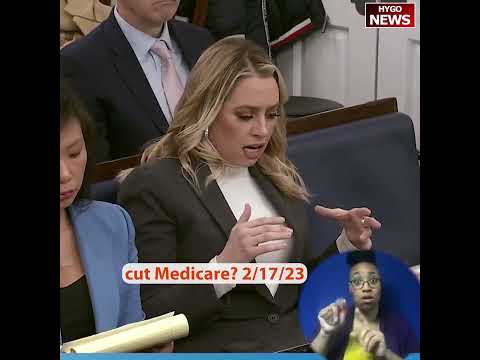
Reporter: HHS Proposes $3B Medicare Advantage Cut — How Does This Square With Biden’s No-Cuts Pledge?
In February 2023, a reporter pressed White House Press Secretary Karine Jean-Pierre on apparent contradiction between HHS proposal and Biden’s Medicare commitments. “Recently, HHS announced some proposed rates for Medicare advantage that would result in a $3 billion reduction to the program. I know Becerra pushed back on that characterization, but can you explain how does it square with the President’s commitment not to cut Medicare or are there cost-saving measures in there somehow in the broader program that you wouldn’t characterize as a cut if it’s a cost-saving measure?” KJP’s response deflected to Secretary Becerra: “I mean, I’m not going to go beyond to what the Secretary Becerra said. What he said is basically where the President is. I want to be very careful here. The President also lowered the deficit in the first two years by $1.7 trillion. All of that is important, that those are not being held hostage by the Republican Party.”
The HHS Medicare Advantage Proposal
Proposal:
HHS announcement — Specific.
$3 billion reduction — Proposed.
Medicare Advantage — Program.
Specific — Detail.
Substantive — Issue.
The HHS announcement about proposed rates for Medicare Advantage resulting in $3 billion reduction was specific program detail. Substantive issue requiring administration explanation given Biden’s Medicare commitments.
The Becerra Pushback Context
Becerra:
HHS Secretary — Xavier Becerra.
Characterized differently — Pushback.
Not “cut” — Framing.
Administrative — Defense.
Cost-saving — Preferred term.
Secretary Becerra’s pushback on “cut” characterization was administrative defense preferring “cost-saving” or alternative framing. HHS internal messaging consistency with Biden pledges.
The Reporter’s Careful Framing
Framing:
Acknowledged — Becerra.
Alternative considered — Cost-saving.
Substantive — Engagement.
Not hostile — Tone.
Professional — Approach.
The reporter’s careful framing acknowledged Becerra’s pushback and considered alternative framing of cost-saving. Substantive engagement rather than hostile tone. Professional approach to substantive issue.
”Cost-Saving Measures”
Alternative framing:
Administrative preference — Yes.
Technical — Distinction.
Efficiency gains — Framing.
Cost-saving vs. cuts — Semantics.
Real — Distinction possibly.
“Cost-saving measures in there somehow in the broader program” was administrative preferred framing. Technical distinction between cuts and efficiency gains. Real distinction possibly depending on specifics.
The Biden No-Cuts Pledge Context
Pledge:
SOTU commitment — Made.
Protecting Medicare — Explicit.
Political — Important.
Base — Motivated by.
Commitment — Visible.
Biden’s no-cuts pledge context included SOTU commitment to protect Medicare. Politically important. Base motivated by commitment. Visible commitment requiring coherence with administrative actions.
”Not Going to Go Beyond”
KJP deflection:
Secretary authority — Deferred to.
Limited engagement — Chosen.
Coordination — Implicit.
Standard — Technique.
Professional — Deferral.
KJP’s “I’m not going to go beyond to what the Secretary Becerra said” deferred to Secretary authority. Limited engagement chosen. Implicit coordination. Standard professional deferral technique.
”What He Said Is Basically Where the President Is”
Alignment:
Alignment claimed — Biden-Becerra.
Coordinated — Position.
Standard — Messaging.
Coherence — Projected.
Unity — Administrative.
“What he said is basically where the President is” claimed Biden-Becerra alignment as coordinated position. Standard messaging of administrative unity. Coherence projected across departments.
”I Want to Be Very Careful Here”
Caution:
Sensitivity acknowledged — Implicitly.
Careful language — Chosen.
Political awareness — High.
Substantive — Limitation.
Strategic — Communication.
KJP’s “I want to be very careful here” acknowledged sensitivity implicitly. Careful language chosen. High political awareness of Medicare topic. Substantive limitation on spontaneous response.
”Lowered the Deficit by $1.7 Trillion”
Deflection:
Standard claim — Again.
Unrelated — To Medicare question.
Pivot — To favorable.
Template — Deployed.
Pattern — Characteristic.
KJP’s “President also lowered the deficit in the first two years by $1.7 trillion” pivot to standard claim was unrelated to Medicare question. Template deployed. Characteristic pattern of topic pivot.
”Not Being Held Hostage by the Republican Party”
Counter-attack:
GOP blame — Deployed.
“Hostage” — Strong term.
Political — Framing.
Attack shifted — To Republicans.
Standard — Technique.
KJP’s “those are not being held hostage by the Republican Party” deployed GOP blame with strong “hostage” term. Political framing shifting attack to Republicans. Standard administrative defense technique.
The Medicare Advantage Context
MA:
Private plans — Through Medicare.
Growing program — Enrollment.
Insurance companies — Participation.
Rates — Annual setting.
Political — Sensitivity.
Medicare Advantage context had private plans through Medicare, growing enrollment, insurance company participation, annual rate setting, political sensitivity around any rate changes affecting insurer revenues.
The Technical Rate Reduction
Technical:
Benchmark rates — Lowered.
Insurer payments — Reduced.
Services affected — Potentially.
Cost — Saving.
Debate — Valid.
Technical rate reduction through lowered benchmark rates reducing insurer payments potentially affected services. Cost-saving framing valid but whether “cuts” was substantively debated.
The Insurer vs. Beneficiary Impact
Impact:
Insurer revenue — Down.
Beneficiary services — Possibly affected.
Benefits reduced — Potentially.
Different stakeholders — Varied impact.
Complex — Analysis.
Insurer vs. beneficiary impact analysis was complex. Insurer revenue down. Beneficiary services possibly affected through benefit reductions. Different stakeholders had varied impact from rate reductions.
The Biden Commitment Coherence
Coherence:
No cuts — Pledged.
Strengthen — Promised.
Negotiate drug prices — Achieved.
Administrative actions — Scrutinized.
Politically — Important.
Biden commitment coherence required scrutiny of administrative actions against no-cuts and strengthen-Medicare pledges. Drug price negotiation was achievement. Administrative actions politically important to examine.
The Medicare Drug Price Negotiation
Drug prices:
IRA provision — Included.
Negotiation — Beginning.
Savings — Projected.
Major accomplishment — Claimed.
Seniors benefit — Argued.
Medicare drug price negotiation as IRA provision beginning would produce projected savings. Major accomplishment claimed with seniors benefit argument. Substantive Medicare policy gain.
The Technical vs. Political Framing
Framing:
Administrative technical — Cost-saving.
Political simple — No cuts.
Gap — Real.
Opponents — Exploit.
Messaging — Challenging.
Technical vs. political framing gap between administrative “cost-saving” and political “no cuts” was real. Opponents could exploit gap. Messaging challenging to reconcile technical and political narratives.
The Republican Attack Vulnerability
Vulnerability:
“Biden cuts Medicare” — Attack.
HHS action — Cited.
Political material — Provided.
Framing — Simplified.
Effective — Attack.
Republican attack vulnerability through “Biden cuts Medicare” attack citing HHS action was political material provided. Simplified framing could be effective attack despite technical nuances.
The Becerra Defense
Defense:
Cost-saving — Framed.
Beneficiary protection — Claimed.
Efficiency — Emphasized.
Technical — Argument.
Administrative — Position.
Becerra’s defense through cost-saving framing, claimed beneficiary protection, emphasized efficiency, technical argument was administrative position. Standard defense of policy decisions by cabinet secretary.
The Healthcare Cost Pressures
Pressures:
Medicare costs — Rising.
Drug prices — High.
Insurer profits — Issue.
Reform needed — Yes.
Pressures — Continuing.
Healthcare cost pressures with rising Medicare costs, high drug prices, insurer profit issues, needed reform, continuing pressures required some policy response from any administration.
The 2024 Campaign Medicare Politics
Medicare politics:
Senior vote — Critical.
No cuts — Popular.
Any changes — Politically sensitive.
Accusations — Potential.
Battle — Political.
2024 campaign Medicare politics had critical senior vote with no-cuts being popular and any changes politically sensitive. Accusations potential. Political battle over Medicare policy central to senior vote.
The Administrative Coordination Evident
Coordination:
KJP defer — To Secretary.
Secretary framing — Consistent.
Administrative — Unity.
Message discipline — Strong.
Professional — Delivery.
Administrative coordination was evident with KJP deferring to Secretary, consistent Secretary framing, administrative unity, strong message discipline. Professional delivery across officials on sensitive topic.
The Press Briefing Accountability
Accountability:
Reporter probed — Substantively.
Professional — Tone.
Detailed knowledge — Displayed.
Accountability — Sought.
Quality — Journalism.
Press briefing accountability through substantive reporter probing, professional tone, displayed detailed knowledge, accountability seeking demonstrated quality journalism on Medicare policy specifics.
The KJP Defensive Strategy
Strategy:
Deferral to Secretary — Used.
Off-topic pivot — Attempted.
Favorable credit — Claimed.
Opponent blame — Added.
Template — Deployed.
KJP defensive strategy used deferral to Secretary, attempted off-topic pivot to deficit, claimed favorable credit, added opponent blame. Template deployed for challenging topic engagement.
The Medicare Financial Sustainability
Sustainability:
Long-term — Challenge.
Hospital fund — Depleting.
Reform needed — Politically difficult.
Cost-saving — Partial approach.
Complex — Issue.
Medicare financial sustainability long-term challenge with depleting Hospital fund required politically difficult reform. Cost-saving as partial approach. Complex issue requiring nuanced engagement.
The Insurance Industry Stakeholder
Industry:
Large stakeholder — Yes.
Lobbying — Active.
Political donations — Substantial.
Policy influence — Real.
Both parties — Engaged with.
Insurance industry as large stakeholder had active lobbying, substantial political donations, real policy influence. Both parties engaged with industry. Policy formation influenced by industry input.
The Beneficiary Perspective
Perspective:
Seniors — Medicare users.
Services — Valued.
Cost-sharing — Concerning.
Benefits protection — Priority.
Political — Power.
Beneficiary perspective from seniors as Medicare users with valued services, concerning cost-sharing, priority on benefits protection gave Medicare users significant political power. Voting block.
The Reform Difficulty
Difficulty:
Politically — Risky.
Both parties — Cautious.
Stakeholders — Many.
Complexity — Real.
Substantive — Reform hard.
Reform difficulty was politically risky with both parties cautious. Many stakeholders. Real complexity. Substantive reform hard to accomplish politically. Third rail reality.
The Bipartisan Opportunities
Opportunities:
Drug pricing — Limited bipartisan.
Waste elimination — Some agreement.
Fraud prevention — General support.
Limited scope — Usually.
Difficult — Broader reform.
Bipartisan opportunities existed on drug pricing (limited), waste elimination (some agreement), fraud prevention (general support). Usually limited scope. Difficult broader reform bipartisanly.
The HHS Role in Policy
HHS role:
Regulatory authority — Substantial.
Rate-setting — Annual.
Policy implementation — Detailed.
Political coordination — Required.
Administrative — Function.
HHS role in policy with substantial regulatory authority, annual rate-setting, detailed policy implementation required political coordination. Administrative function with political sensitivity.
The Political Messaging Coordination
Coordination:
Secretary briefings — Standard.
KJP briefings — Coordinated.
Messaging discipline — Priority.
Cross-agency — Coherence.
Professional — Approach.
Political messaging coordination through Secretary briefings with coordinated KJP briefings prioritized messaging discipline. Cross-agency coherence professional approach to sensitive topics.
The Long-Term Medicare Trajectory
Trajectory:
Enrollment growing — Yes.
Costs rising — Pressures.
Reform needed — Structural.
Politically — Difficult.
Continuing — Challenge.
Long-term Medicare trajectory with growing enrollment, rising cost pressures required structural reform politically difficult. Continuing challenge for any administration addressing fiscal sustainability.
The 2024 Senior Vote
Senior vote:
Critical — Demographic.
Trump 2020 — Won.
Biden 2020 — Also competitive.
Medicare — Issue.
Battleground — Voters.
2024 senior vote was critical demographic. Trump won seniors in 2020 but Biden was competitive. Medicare as issue central to senior vote battleground voters. Political importance high.
The Eventual Medicare Advantage Response
Response:
Administration adjusted — Some.
Political pressure — Effective.
Rate revision — Happened.
Moderate changes — Made.
Political — Outcome.
Eventual Medicare Advantage response saw administration adjust under political pressure. Rate revision happened with moderate changes. Political outcome through pressure on administrative policy.
The Press Corps Informed Questions
Questions:
Detailed knowledge — Required.
Policy specific — Inquiry.
Professional preparation — Evident.
Substantive — Engagement.
Quality — Journalism.
Press corps informed questions required detailed knowledge with policy-specific inquiry. Evident professional preparation. Substantive engagement. Quality journalism on complex policy issues.
The Institutional Stakeholders
Stakeholders:
HHS — Department.
CMS — Agency.
Congress — Oversight.
Insurance companies — Industry.
Beneficiaries — Recipients.
Institutional stakeholders included HHS Department, CMS Agency, Congressional oversight, insurance company industry, beneficiary recipients. Complex stakeholder landscape for Medicare policy.
Key Takeaways
- A reporter asked about HHS proposal reducing Medicare Advantage by $3 billion: “How does it square with the President’s commitment not to cut Medicare?”
- She acknowledged: “Becerra pushed back on that characterization.”
- She suggested alternative: “Are there cost-saving measures in there somehow in the broader program that you wouldn’t characterize as a cut if it’s a cost-saving measure?”
- KJP deferred: “I’m not going to go beyond to what the Secretary Becerra said.”
- She pivoted to deficit: “The President also lowered the deficit in the first two years by $1.7 trillion.”
- She attacked Republicans: “Those are not being held hostage by the Republican Party.”
Transcript Highlights
The following is transcribed from the video audio (unverified — AI-generated from audio).
- Social security stuff as it relates to the debt ceiling. Recently, HHS announced some proposed rates for Medicare advantage that would result in a $3 billion reduction to the program.
- I know Becerra pushed back on that characterization, but can you explain how does it square with the President’s commitment not to cut Medicare?
- Or are there cost-saving measures in there somehow in the broader program that you wouldn’t characterize as a cut if it’s a cost-saving measure?
- I’m not going to go beyond to what the Secretary Becerra said. What he said is basically where the President is.
- The President also lowered the deficit in the first two years by $1.7 trillion.
- All of that is important, that those are not being held hostage by the Republican Party.
Full transcript: 138 words transcribed via Whisper AI.