 HYGO News
 A: Google’ 12K job cuts A:Layoffs remain record low
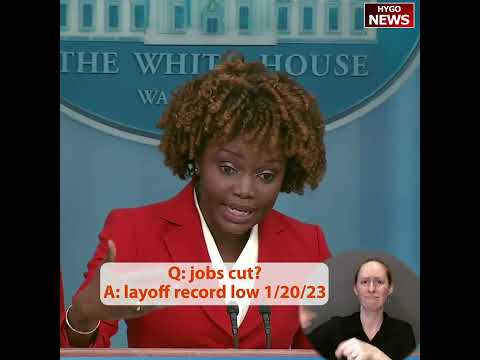
White House on Google 12,000 Layoffs: “Leading Analysts” Say Tech Cuts Not Indicative of Broader Economy Trends
In January 2023, a reporter asked the White House about President Biden’s concerns regarding the growing wave of tech sector job cuts — Google parent Alphabet had announced 12,000 cuts that day, following Microsoft’s 10,000 earlier in the week. “Is this something the president is concerned about?” the reporter asked. The White House response acknowledged concern but pivoted to aggregate data: “We watch very closely when we hear these types of reports of Americans losing jobs… We’re seeing that layoffs remain record low according to job opening data. The U.S. economy continues to grow. Initial unemployment claims are historically low and the unemployment rate is at a 50-year low.” The spokesperson concluded: “Leading analysts have publicly stated that they do not believe the recent layoffs in the tech industry are indicative of trends in the broader economy.” The response illustrated administration strategy of aggregate data and analyst citations to contain damage from concentrated sector layoffs.
The Tech Layoff Accumulation
By January 21, 2023, major tech layoffs had accumulated:
Meta — 11,000 announced November 2022.
Amazon — 18,000 announced early January 2023.
Microsoft — 10,000 announced January 18, 2023.
Google/Alphabet — 12,000 announced January 20, 2023.
Twitter, Salesforce, others — Substantial cuts.
Total well over 100,000 — Across industry.
The pace of layoff announcements had accelerated. In a single week — January 16-22, 2023 — Microsoft and Google alone had announced 22,000 cuts. The tech contraction was undeniable.
The Alphabet Context
Google parent Alphabet’s 12,000 cut was significant:
Large scale — 6% of workforce.
Universal impact — Across functions.
Sundar Pichai responsibility — Taking.
Post-COVID adjustment — Framing.
Stock reaction — Mixed.
Alphabet had been one of the companies that had hired aggressively during COVID. The layoffs represented partial reversal — bringing headcount closer to pre-COVID levels. The framing was business adjustment rather than economic weakness.
The Reporter’s Question
The reporter framed cumulatively. “Does the president have any concern about the number of job cuts that are happening in the tech sector? Outfit announced at Scootless parent company, obviously announced 12,000 job cuts today. Followed by Microsoft earlier this week. Following several thousand from last year as well, is this something the president is concerned about?” the reporter asked.
The framing emphasized:
Cumulative scale — Multiple companies.
Recent timing — This week/today.
Pattern recognition — Not isolated.
Presidential concern — As measure.
Legitimate policy question — Economic indicator.
The accumulation question was harder to deflect than isolated company questions. When multiple major companies announce massive layoffs in quick succession, the pattern is real data about economic direction.
”Watch Very Closely”
The spokesperson used the standard framing. “So of course we watch very closely when we hear these types of reports of Americans losing jobs. That is something that the president is certainly aware of,” the spokesperson said.
The “watch closely” language:
Observer posture — Rather than actor.
Awareness claim — Not policy response.
Empathy suggestion — For affected workers.
Standard administration language — For economic events.
Non-commitment — To action.
This was almost identical phrasing to the response on Microsoft alone earlier in the week. The same template was being applied — watch closely, note impact, pivot to aggregate.
”Layoffs Remain Record Low”
The spokesperson repeated the aggregate defense. “We’re seeing that layoffs remain record low according to job opening data,” the spokesperson said.
The claim:
JOLTS data — Job Openings and Labor Turnover Survey.
Record low layoffs — Aggregate.
Most recent period — Covered by data.
Favorable framing — For administration.
Selective statistic — Among many.
The JOLTS data did show layoffs at historic lows aggregate. But the data had lags and didn’t capture the most recent tech cuts. Using this data to minimize concern about just-announced cuts was somewhat tautological — of course the just-announced cuts weren’t yet in the data.
”The U.S. Economy Continues to Grow”
The spokesperson emphasized overall growth. “The U.S. economy continues to grow,” the spokesperson said.
The growth claim:
GDP positive — In relevant period.
Broader context — Beyond tech.
Administration success — Implied.
Tech cuts minimized — By comparison.
Standard framing — For economic messaging.
GDP growth was indeed continuing. The economy wasn’t in recession. Aggregate indicators were mostly positive. The administration was reasonably citing this context, though it didn’t address the specific question about concentrated tech sector impact.
”Initial Unemployment Claims Historically Low”
The spokesperson added more aggregate data. “Initial unemployment claims are historically low and the unemployment rate is at a 50-year low,” the spokesperson said.
The multiple statistics:
Initial claims — Weekly filings.
Historically low — Favorable.
Unemployment rate — Below 4%.
50-year low — Remarkable.
Strong labor market — Aggregate.
These were all true statements. Aggregate labor market indicators were strong. The administration had genuine economic successes to point to. The question was whether aggregate indicators adequately addressed concerns about specific sector concentration.
”Leading Analysts Have Publicly Stated”
The spokesperson cited third-party analysts. “Leading analysts have publicly stated that they do not believe the recent layoffs in the tech industry are indicative of trends in the border economy,” the spokesperson said.
The “border economy” was likely transcription error for “broader economy.” The substantive reference:
Third-party validation — Analyst statements.
Tech-specific cuts — Not broad trend.
Analyst credibility — Invoked.
Independent confirmation — Of administration framing.
Authority substitute — For administration analysis.
Citing “leading analysts” added outside credibility to the administration framing. Whether specific analysts had said this was fact-checkable, but the invocation provided cover for the minimizing framing.
The Tech Sector Specifics
The tech sector had specific dynamics:
Overhiring during COVID — Aggressive expansion.
Demand normalization — Post-pandemic.
Advertising softness — Affecting tech giants.
Macroeconomic uncertainty — Causing caution.
Valuation pressure — From equity markets.
These dynamics were tech-specific to some degree. The COVID-era hiring bubble had been real. Advertising spending softness was hitting ad-dependent tech companies. These factors didn’t fully apply to other sectors.
The Broader Economy Connection
But tech cuts could affect broader economy:
Consumer spending — By laid-off workers.
Geographic impact — In tech hubs.
Supplier impact — On adjacent businesses.
Sentiment effects — On overall mood.
Multiplier effects — Economic ripples.
While tech cuts might not be “indicative” of overall trends, they weren’t entirely disconnected. High-earning laid-off tech workers might reduce spending. Real estate in tech hubs could be affected. Small businesses serving tech campuses would feel impact.
The Administration Messaging Strategy
The administration’s strategy was consistent:
Acknowledge layoffs — But minimize.
Cite aggregate data — Favorable.
Reference third parties — For validation.
Emphasize growth — Continuing.
Downplay sector specifics — Not broadly indicative.
This approach had coherence but limitations. If the pattern continued into other sectors, the messaging would become harder to maintain. For now, tech-specific framing was plausible.
The Forward Looking Concerns
Forward-looking indicators were mixed:
Inverted yield curve — Recession indicator.
Consumer confidence — Varied.
Manufacturing PMI — Weakening.
Housing market — Cooling significantly.
Corporate earnings — Under pressure.
Various leading indicators suggested economic challenges ahead. The aggregate data the administration cited was backward-looking. Forward indicators were more concerning. The administration was emphasizing the favorable data while not highlighting the unfavorable.
The Tech Workers Reality
For tech workers, the abstract framing was cold comfort:
Job loss personal — Regardless of aggregate.
Geographic concentration — Affecting communities.
Career disruption — Whatever data showed.
Financial impact — Real.
Industry outlook — Uncertain.
Tech workers affected by layoffs weren’t reassured by hearing that aggregate layoffs were at historical lows. Their individual experience was of job loss, and their local community was seeing significant contraction. The aggregate was cold comfort.
The Union Responses
Tech layoffs generated union and worker responses:
Organizing efforts — Accelerating.
Contract bargaining — Power shifts.
Policy calls — For protections.
Legal challenges — In various cases.
Political engagement — By affected workers.
As tech workers faced widespread layoffs, worker organization within tech was growing. This could affect the industry’s relationship with labor unions, historically weak in tech. Longer-term implications existed beyond immediate economic impact.
The Economic Narrative Battle
Broader narrative battles continued:
Administration claiming success — Aggregate indicators.
Critics pointing to concerns — Specific metrics.
Different time horizons — Emphasized.
Sector focuses — Varying.
Political implications — Ongoing.
Each side had legitimate data to cite. Which framing dominated public perception would affect political outcomes. The administration was investing significant messaging resources in its preferred framing.
The 2024 Context
Economic messaging was critical for 2024:
Biden reelection campaign — Upcoming.
Economy top issue — For voters.
Current conditions — Mixed.
Narrative needed — For campaign.
Setup underway — In 2023.
How the economy was perceived in 2024 would significantly affect Biden’s reelection prospects. The administration was working to establish favorable narrative during 2023 that could carry into campaign. Minimizing concerns about current conditions was part of this project.
The Historical Context
Tech sector contractions weren’t unprecedented:
2000-2001 dot-com bust — Major tech crash.
2008-2009 recession — Affected all sectors.
Periodic adjustments — Various years.
Sector cycles — Normal.
Recovery patterns — Varied.
Previous tech contractions had occurred and the industry recovered. Whether the current situation would follow similar pattern or have different outcomes was uncertain. Historical context suggested tech cycles were normal, but each cycle had unique features.
The Federal Reserve Context
Fed policy was significant context:
Aggressive rate hikes — During 2022.
Continuing tightening — Into 2023.
Rate-sensitive sectors — Tech affected.
Valuation compression — Cost of capital.
Intentional cooling — Of economy.
Tech was particularly vulnerable to interest rate increases because tech valuations depended heavily on discounting future cash flows. Fed tightening was specifically designed to cool the economy — including through investment adjustments that would affect tech.
Key Takeaways
- A reporter asked the White House about Biden’s concerns regarding accelerating tech layoffs after Google’s 12,000 cuts following Microsoft’s 10,000 earlier in the week.
- The spokesperson acknowledged: “We watch very closely when we hear these types of reports of Americans losing jobs.”
- They pivoted to aggregate data: “Layoffs remain record low… Initial unemployment claims are historically low and the unemployment rate is at a 50-year low.”
- The spokesperson cited third-party analysis: “Leading analysts have publicly stated that they do not believe the recent layoffs in the tech industry are indicative of trends in the broader economy.”
- The response used the administration’s consistent strategy of aggregate data and third-party validation to contain concerns about concentrated sector layoffs.
- The approach had coherence but depended on tech-specific framing holding as layoffs spread or other sectors showed stress.
Transcript Highlights
The following is transcribed from the video audio (unverified — AI-generated from audio).
- Does the president have any concern about the number of job cuts that are happening in the tech sector?
- Alphabet, Google’s parent company, obviously announced 12,000 job cuts today. Followed by Microsoft earlier this week.
- We watch very closely when we hear these types of reports of Americans losing jobs.
- We’re seeing that layoffs remain record low according to job opening data. The U.S. economy continues to grow.
- Initial unemployment claims are historically low and the unemployment rate is at a 50 year low.
- Leading analysts have publicly stated that they do not believe the recent layoffs in the tech industry are indicative of trends in the broader economy.
Full transcript: 144 words transcribed via Whisper AI.