 HYGO News
 10/3/2020 Dr. Sean Conley, Physician to Trump, Provides an Update on President
10/3/2020 Dr. Sean Conley, Physician to Trump, Provides an Update on President
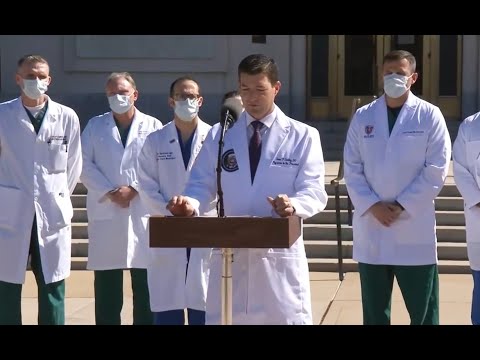
On October 3, 2020, White House physician Dr. Sean Conley led a team of doctors in a press briefing outside Walter Reed National Military Medical Center to update reporters on President Trump’s condition after his COVID-19 diagnosis. Conley said they were “extremely happy with the progress the president has made,” though the briefing was marked by confusion over the timeline of the diagnosis and repeated evasiveness about whether Trump had been on supplemental oxygen.
The Medical Team Briefing
Conley opened by thanking the public for the “enormous outpouring of support and prayers” and introduced a large medical team assembled behind him, including pulmonary critical care specialists Dr. Sean Dooley, Dr. Brian Garibaldi, and Dr. Robert Browning, along with infectious disease, anesthesia, nursing, and pharmacy specialists.
Conley explained why Trump had been brought to Walter Reed: “As reported yesterday, in consultation with this group, I recommended we bring the president up to Walter Reed as a precautionary measure to provide state-of-the-art monitoring and any care that he may need.”
He then placed the president’s condition in clinical context: “Just 72 hours into the diagnosis now, the first week of COVID, and in particular day 7 to 10 are the most critical, and determining the likely course of this illness.” Despite being in the early, critical phase, Conley reported improvement: “Thursday, he had a mild cough and some nasal congestion and fatigue, all of which are now resolving and improving.”
Dr. Dooley: Organ Functions Normal
Dr. Sean Dooley provided specifics on the president’s condition. “We have monitored his cardiac function, his kidney function, his liver function, all of those are normal,” Dooley reported. “The president this morning is not on oxygen, not having difficulty breathing or walking around the White House medical unit upstairs.”
Dooley quoted the president directly: “As we were completing our multidisciplinary rounds this morning, the quote he left us with was, ‘I feel like I could walk out of here today,’ and that was a very encouraging comment from the president.”
Dr. Garibaldi: Treatment Details
Dr. Brian Garibaldi detailed the treatment regimen. He confirmed that approximately 48 hours before the briefing, Trump had received “a special antibody therapy directed against the coronavirus” — Regeneron’s experimental antibody cocktail. “We’re working very closely with the company to monitor him in terms of that outcome,” Garibaldi said.
Trump had also received his first dose of remdesivir the previous evening, with a planned five-day treatment course. Additional medications included zinc, Vitamin D, famotidine, melatonin, and a daily aspirin.
Garibaldi reported that Trump was “in such great spirits” and that the plan for the day was to encourage him to eat, drink, and stay active within the medical unit.
The Oxygen Question
The most notable moment of the briefing was the extended back-and-forth between reporters and Conley over whether Trump had received supplemental oxygen at any point during his illness. The exchange became a defining moment of the press conference.
“He has not received any supplemental oxygen,” Conley said initially. When pressed, he added, “He’s not on oxygen right now, that’s right.”
A reporter followed up: “Has he ever been on supplemental oxygen?”
“Right now he is not on oxygen,” Conley repeated.
“I know you keep saying right now, but should we read into the fact that he had been previously?” a reporter asked.
“Yesterday and today he was not on oxygen,” Conley replied, still not directly addressing earlier periods.
Another reporter tried to pin down the timeline: “I’m going to try to pin you down one more time. I know you said there’s no oxygen.”
After extended pressure, Conley eventually stated: “Thursday no oxygen, none at this moment.” He confirmed “no Thursday, no Friday, no Saturday” — but the persistent hedging and use of “right now” rather than definitive denials raised questions among reporters about whether Conley was being fully transparent.
His vital signs showed an oxygen saturation of “about 96 percent” while “up walking around,” which fell within normal range.
The Timeline Confusion
Conley’s statement that they were “72 hours into the diagnosis” created significant confusion because it suggested Trump had been diagnosed on Wednesday, September 30 — a full day before his official positive test was announced. If true, it would mean Trump had attended a fundraiser in New Jersey and other events while knowing he was positive.
When pressed, Conley attempted to clarify on the spot, but his explanation only deepened the confusion. He said that “Thursday afternoon, following the news of a close contact, is when we repeated testing and given kind of clinical indications, had a little bit more concern. And that’s when, late that night, we got the PCR confirmation that he was” positive.
Conley later issued a written memorandum clarifying that he had “meant to say it was day three” of the diagnosis rather than 72 hours, and that Trump was first diagnosed with COVID-19 “on the evening of Thursday, October 1st.” Similarly, his reference to the antibody cocktail being administered “48 hours ago” was corrected to “day two,” with the treatment given on Friday, October 2nd.
Key Takeaways
- Dr. Conley reported Trump was making strong progress with normal organ functions, resolved symptoms, and no current supplemental oxygen, though his repeated use of “right now” when asked about prior oxygen use raised transparency concerns among reporters.
- Trump was receiving a five-day course of remdesivir plus Regeneron’s experimental antibody cocktail, along with zinc, Vitamin D, famotidine, melatonin, and aspirin, with his medical team citing oxygen saturation at 96 percent.
- Conley’s statement about being “72 hours into the diagnosis” created confusion about whether Trump had tested positive a day earlier than publicly announced, prompting a written correction clarifying the president was first diagnosed on the evening of Thursday, October 1st.